
Because God wanted to make the unchanging nature of his purpose
very clear to the heirs of what was promised, he confirmed it with an oath.
God did this so that, by two unchangeable things in which it is impossible for God to lie, we who have fled to take hold of the hope set before us may be greatly encouraged.
We have this hope as an anchor for the soul,
firm and secure. It enters the inner sanctuary behind the curtain,
where our forerunner, Jesus, has entered on our behalf.
Hebrews 6:17-20a NIV
NOTE: This chapter deals with mature subject matter. Please understand my purpose in approaching this topic is to raise awareness for parents and to give a child’s interpretation of events. Thank you for your grace.
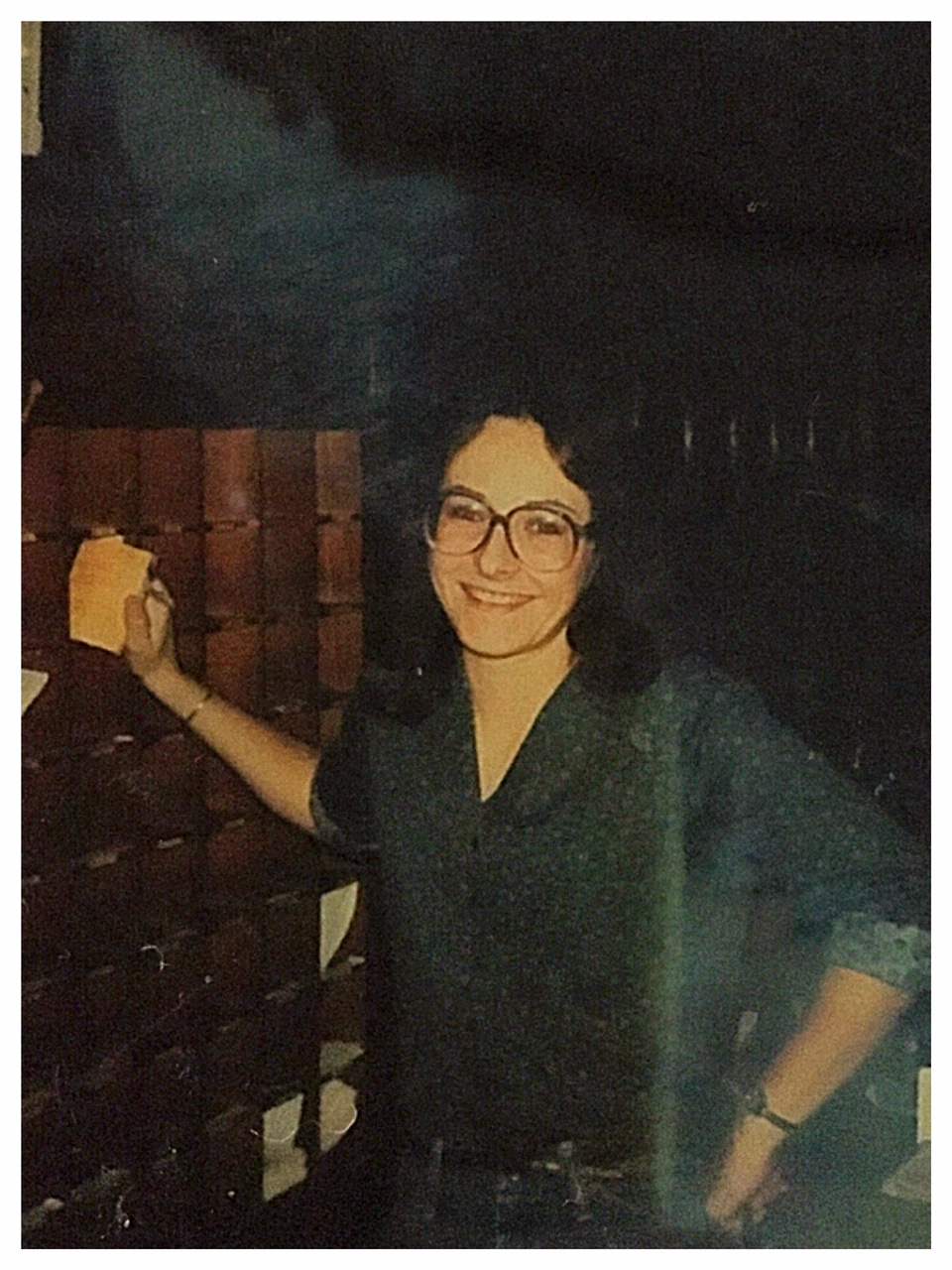
Days in Boulder came to an end. Parents had dealt with grief and professional situations I was not privy to and major life decisions were made. Dad retired from the university after giving them 20 years, both Mom and Dad got Arkansas real estate licenses, and to the south we moved. They had some history down that direction. I did not.
As I approached age 13 I sat in the passenger seat of the U-Haul next to my dad and we drove out of Boulder while “Delta Dawn” by Helen Reddy came over the radio. End of story.
Beginning of another.
Freedom was found on a bicycle in the sweltering Arkansas summer of 1974. Thanks be to God I came upon a few quality friends quite soon and spent steamy lazy days and cooler evenings cruising around my new hometown on a Takara 10-speed mostly with Betty, becoming familiar, becoming southern, and fitting in. We’d go “uptown” to Waltons (yes, the predecessor to Wal-Mart) just off the Bentonville square and make nuisances of ourselves at her parents’ abstract office and my parents’ real estate office, knowing just when to leave before they put us to work. Betty and I logged upwards of hundreds of miles on our bikes that first hot summer, wearing grooves in the sun-softened asphalt and imprinting my new home into my heart.
Melanie’s loud, rowdy family scooped me up, often incorporating me into their household, little knowing that I watched and learned how they operated, this multiple kid, stay-at-home-mom-operation in direct contrast to my own quiet existence. On Saturday evenings her mother often would make caramel corn in her oven while we, a group of gangly sunburned teenagers, laid around on couches watching The Love Boat, accepting whatever came from the kitchen. I don’t remember thanking her, but please, Lord, I hope I did. I’d occasionally go out to Beaver Lake with them for an afternoon of sitting around eating and tanning and doing what my family did not – relaxing. Can’t say exactly why, but back at the house Mel and I regularly gave baths to her ancient, highly grumpy, quick-to-bite and always growling Chihuahua, Tippy. Or was it Nippy? Sippy? Drippy? Hippy? Zippy? Anyway, we came away injured, wet, and happy every time. Weirdos.
That first Arkansas summer included immersion into the world of southern marching band. Okay. So it’s a big deal and it starts young and it starts when the weather is particularly unforgiving. I would meet my lifelong friend, Ilima, there in band, she the California transplant and my main competition for first chair clarinet and maid of honor in my wedding the following decade. Also in band was Sharon, possibly the most conservative and stable influence during those days whose family attended the Wesleyan church where I witnessed my first altar call. Loved it. Couldn’t have told you why. But I can now.
I am still in touch with all four of these outstanding women. They are frozen in time as 13 year olds, not the 60-somethings we all are, but maybe they won’t complain about that.
Not all remained well in my innocent world.
A funny thing about traumatic events is that they don’t always seem traumatic at the time. You think, “Oh. That just happened” and go on. It’s a primitive, protective, deal-with-it response. Then. Then. Then . . . you start to feel it. Later you think it through. Over and over. Sometimes you get help. Most times you don’t. And then. Then. Then . . . it comes into clearer focus. The trauma was real. It really happened. And it should not have.
But nobody acknowledged it. You bore it alone.
He did not rape me. No. What our longtime family friend, that “grandfather” type person took from me in an instant was the only reality I had ever known. My childhood. The assault on my young, growing soul and personhood began in earnest in that dim Arkansas hallway on the way to the bathroom and I carried the perception throughout my teenage years that my body was not precious. It was for others and I was to let them. It was not worth fighting for.
That night, those moments, changed me.
This older couple was literally like an extra set of grandparents and would invite me to spend the night with them once in a while. I had never been the age I was now, however. I was changing in looks. Maturing. And when he was suddenly behind me, upon me, there and gone within half a minute, some mechanism in me spoke words to my spirit of, “Oh. This is how it is now I suppose.” But I still called home secretly later on that night.
And no one came to get me.
They did indeed come the next afternoon. But with polite excuses of reasons for these so-called “grandparents” about why they needed to pick me up earlier than planned. We had cake and lemonade in the backyard before exchanging hugs and departing in our car never to speak of it. The relationship with these people was too important. So civilized. They were parents of my mother’s best friend. That boat could not be rocked.
For some of you reading these words there might be feelings of shock and anger that I would expose this scene to the world along with my interpretation of the lifelong interwoven effect it had on me. With respect and love, you weren’t there. No one was. That’s a solitary story line if ever there was one.
Now hear this: with every fiber of my being I loved and respected my mother, and now am striving to honor her memory with my own life, actions and words. She came from a history of covering up and not speaking about topics such as abuse. Hear this also: GET IN BETWEEN YOUR CHILDREN AND THE BAD STUFF. I’m not speaking of wrong choices they make for themselves from which there are life lessons to be learned. No. When they need you, though, to rescue and defend them, tamp down your own fears and your tendencies to smoothe over rough situations and get in there and fight for them. God is on the side of right. On the side of fierce parenting if need be. Your kids are watching you to learn how to protect your future grandchildren. Take courage and do it. Come to their rescue.
So, tender roots that had been planted in my new Arkansas home started coming loose. During my sophomore year the truth came a little harder for me and lies a bit easier. Nothing earth shattering. Just a bit similar to a baby tumbleweed starting to blow down a dusty road, picking up speed.
And then we moved again, transplanting a 15 year old girl down the highway to a new high school. With strangers. My new digs were ground floor apartments in a five story retirement home in which dwelt my parents, me, and approximately 45 wrinkled up old folks. The parents were taking on a new business challenge. I lived under the dining room.
And I was cranky about it.
And what do you do with a cranky teenager? You put her to work.
I worked the front desk at the switchboard with the long cords plugging in for incoming and outgoing and answering questions for people (because I knew everything) and sorting mail. Ugh. Then there were the kitchen/dining room shifts. Ugh. That meant hauling it out of bed at 5:30 a.m. and hustling it up the back stairs to the kitchen to start laying out juices and cereals and helping the cook serve breakfasts. Slave labor I tell you! Ugh. What came after meals was the prize . . . the dish room. Double Ugh. Industrial dishwasher where you shoved and pulled the trays in and out after washing all the uneaten oatmeal and who-knows-what down the disposal. Cranky, surly, difficult. Didn’t help that if you went in that room after dark when everyone was gone to bed, the cockroaches on the walls scattered like speedy dust in the wind when you turned on the light. Triple Quadruple UGH. Crankier. Surlier.
Eventually, even though resistant, I came to appreciate many of the residents. I was taught by my parents (who were somehow surviving living with me) to respect and listen to the old ones who really did know a thing or two.
Mr. Percival Farley was a wonderful classy gentleman. Tall, nearly bald with just a few wisps of snow white hair, and ever so slightly stooped as he walked carefully with his cane as though not wanting to bother anyone. There was trouble with his throat causing his voice to be not much above a whisper. Such a kind man. Spent dozens, no, hundreds of hours working jigsaw puzzles in the activity room which was either a testament to his patient personality or the cause of it.
Mrs. Ethel Marie Smith. Singing voice of an angel. Knew every word to multiple hymns, Christmas carols and pop hits from WWII, but couldn’t remember that her bra should be worn on the inside of her dress. And she was always amiable about the suggestion of “Why don’t we try it this way today.” Lovely sweet smile.
Mrs. Dickerson hated me. Multiple times a day she would come to the front desk and insist that I take her and her suitcases to the bus station to go see her daughter, whereupon my matter-of-fact but politely negative response would cause her to come back with a slight growl and the now infamous words, “You give me a pain I can’t locate.” And I would smile. And then we’d do it again in a couple hours.
Colonel Rudelius was an actual WWI (that’s a One not a Two) hero and had the medals in his room to prove it. But keeping him inside the building at night was a task for a small army — remember, this is long before the days of “assisted living” facilities with coded door locks and multiple staff members. We were a mom and pop and daughter operation during the nighttime hours. It wasn’t long after our move there that my 16-year old self picked him up in my car on the streets of downtown Rogers at 1:00 a.m. on my way home from an out-of-town football game. We must’ve been quite the sight, the two of us, and if the entire town hadn’t been asleep it might’ve been amusing to witness. I pulled over and invited him to get in. He agreed (thank you, Lord) and after arriving back home, getting him out of the car, through the door of the building and handing him over to the owners of the fine establishment (Mom and Dad), I’m sure I muttered something vaguely unsupportive about our new lifestyle and went to bed.
Oh, and Mr. Rauth (“Route”) Barney Rauth. German. Short. Always smiling but it was hard to tell because of his bent back. He would strain to show you his face. And it was worth it. I loved him. He too was among the CC-ers — cane carriers, and never varied his gait or the rhythmic plunking down of his thick, short, three-footed cane. Know how I know that? His spot at breakfast, lunch, and dinner was right above my bedroom. If I was tardy arising from bed I could count on the shuffle shuffle slam, shuffle shuffle slam and would fly out of bed silently thanking Mr. Rauth knowing it was 8:00 a.m. and I’d avoided my dad switching on the light and announcing that I was “burning day light.” Living under the dining room had its perks.
I didn’t know it then, but these folks were my training ground. I lived with them full time for my last two years of high school and much of the next year so I knew them well. They modeled aging to me. Some positively, some negatively. But there they were in full view of teenage me demanding more milk for their oatmeal, or calling the switchboard for the umpteenth time that day to ask what time it was, or needing help reading small type on an envelope, or telling me stories about one or two or three of their children who had died as babies. There was the day the tall lady with the crutch got into an angry scuffle with the short lady who had a walker as they got off the elevator and I had to get in the middle of them and break it up. We all ended up giggling. Some were elegant. Some were rough. They cursed like sailors and prayed like Jesus. Two of them died right in front of me. Not all of their children or families loved them well, but some did. I witnessed both of those spectrums. Old is not easy. Dignity can be hard to come by. When it starts to slip through aging fingers it must be provided by others. I’m proud to say that after I left home and went about my way in life, my parents continued to provide that dignity for 23 years.
As high school commencement approached it is safe to say I had graduated into a full-fledged, nicely dried out tumbleweed of epic proportions. I began to spend my life tight-roping it from one lie to the next in order to facilitate my lifestyle away from my parents. Bless ’em. They couldn’t have been that gullible. I think they knew I was being blown all over the place by whatever negative influences came my way but were too used to smoothing things over, waiting for situations to right themselves. I had a V-8 1970 Cutlass Supreme purchased for me at a used car lot when I turned 16, which you might think is a cool muscle car but which I thought looked like an ugly tank. My dad probably knew it would keep me safe in an inevitable wreck. It did indeed. A couple of them in fact. Thanks, Daddy. And God.
The Class of 1979 duly walked the platform of Rogers High School and that was that.
Sounds simple enough.
NOTE: It is this writer’s hope that these words you’ve read are not harmful to your perceptions of her. But she cannot help it if they are. I leave this chapter with words from Volume I of Every Moment Holy, and a “Liturgy for the Washing of Windows” by Douglas Kaine McKelvey with hope that you cannot see me, but what is on the other side by following this advice:
. . . contemplate how the glass is not set in the window frame in order to be seen,
but to be seen THROUGH . . .
A bruised reed he will not break, and a smoldering wick he will not snuff out. In faithfulness he will bring forth justice.
Isaiah 42:3
 Beyond Lashley Lane